Building the formula
A pub-shaped steakhouse with approachable prices, familiar dishes and enough ceremony to make dinner feel like an occasion.
Complete chronology
Beefeater’s history is not a straight rise and fall. It is a story of post-war dining, rapid scale, borrowed estates, repeated reinvention and one decisive shift from restaurants to hotel rooms.
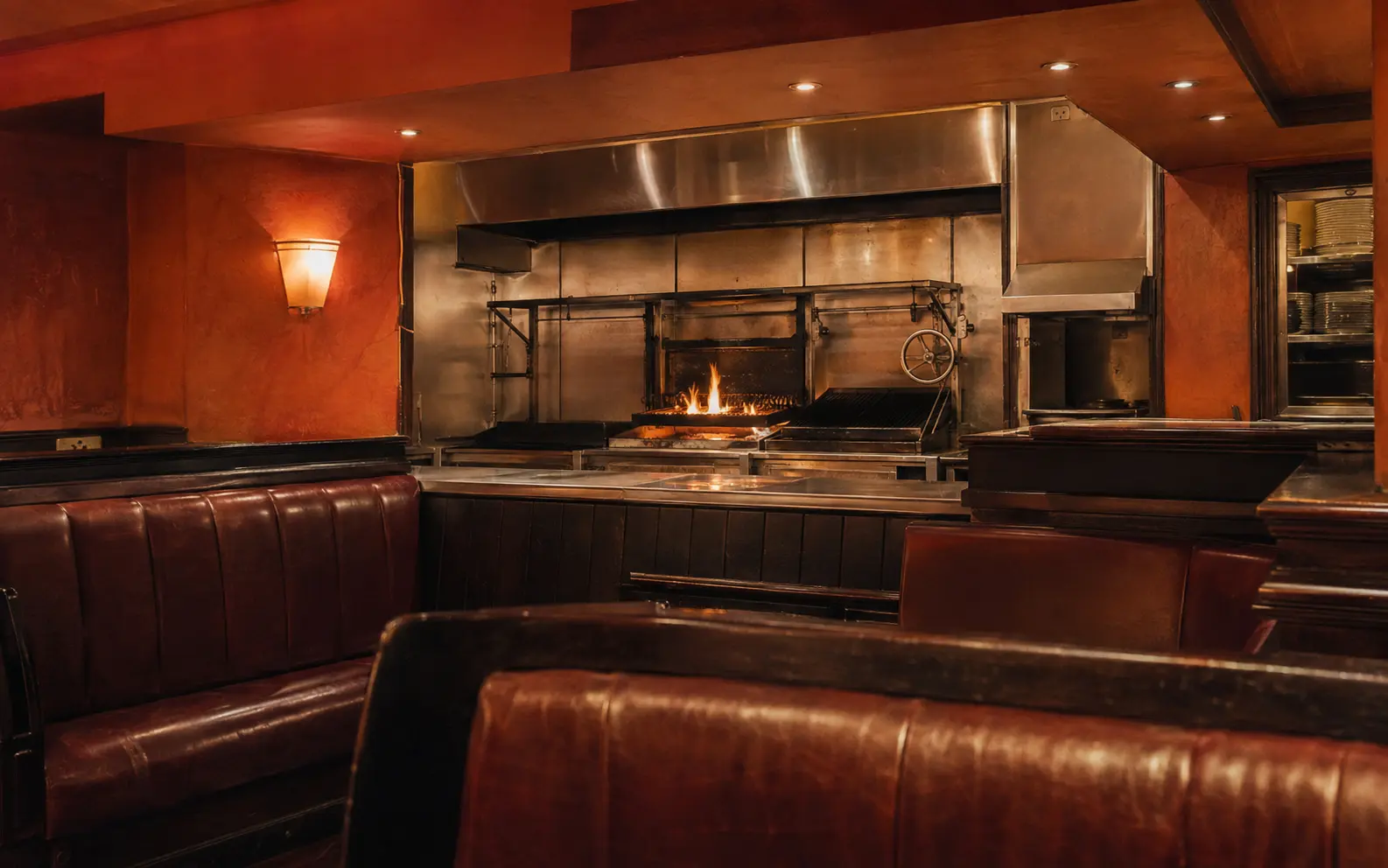
Original editorial reconstruction · a visible-grill refit rather than a photograph of a real venue
In brief
A pub-shaped steakhouse with approachable prices, familiar dishes and enough ceremony to make dinner feel like an occasion.
The Berni estate joins Whitbread, the Beefeater network reaches its reported peak and the once-modern formula begins to age.
Open kitchens, warmer interiors, estate sales and new brand identities repeatedly recast the chain around visible chargrilling.
Whitbread prioritises Premier Inn rooms and integrated hotel dining, first shrinking and then retiring its restaurant brands.
The opening proposition
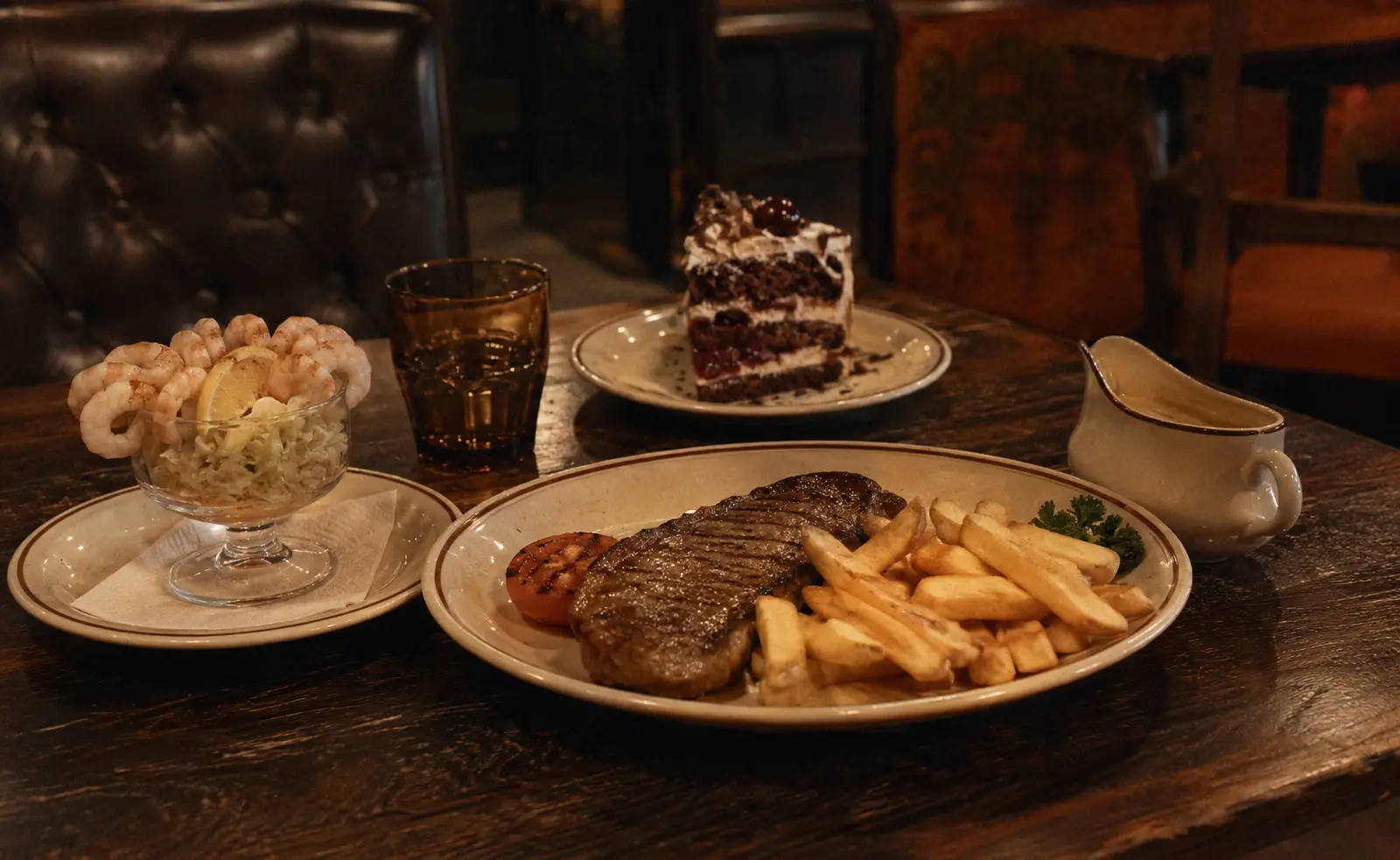
Contemporary-retrospective reporting describes the popular 1974 meal as prawn cocktail, rump steak and Black Forest gâteau with two glasses of Liebfraumilch. That combination says more than a menu list: it placed a modest celebration within reach of families who were still learning to treat restaurant dining as ordinary.
Evidence for the reported meal ↗The long view
Estate totals below come from reports with different scopes: some count Beefeater alone, others a mixed Whitbread pub-restaurant portfolio. The figures are therefore dated snapshots, not one continuous series.
Nine dated snapshots
Restaurant counts are not a single clean dataset. These figures come from sources with different dates and scopes, so each one stays attached to the claim it can actually support.
The Halfway House at 801 Great Cambridge Road, Enfield, became the first Beefeater. The building later changed format and opened as a Toby Carvery in April 2009.
CAMRA ↗A contemporary account put Beefeater at roughly 270 outlets and 11,000 staff, alongside a £5 million four-year training commitment. It is a dated snapshot, not an audited peak.
The Independent ↗Financial Times reporting records 35 new outlets as Whitbread’s retail division produced more than half of group profit. The division included other businesses, so this is not a Beefeater-only profit claim.
FT archive ↗In January 2003, Whitbread said it would dispose of more than a fifth of the chain, convert another seven sites and develop a new format for those retained.
The Caterer ↗By April 2003, reporting described 160 remaining Beefeaters. Their sales were up 3.3% and profits up 18%, even as disposals held back the wider figures.
Morning Advertiser ↗Mitchells & Butlers paid this for 239 mixed Whitbread pub-restaurants. It was not a sale of 239 Beefeaters, an important distinction often lost online.
Guardian: The 2006 estate deal ↗Forty-four mainly Beefeater pub-restaurants were exchanged for 21 hotels with 1,245 rooms. Both sides were valued at £78 million and no cash changed hands.
Guardian: The 2008 property exchange ↗Whitbread’s 2005–06 annual report says a ‘science of service’ trial cut average service time by sixteen minutes—an unusually revealing look at the systems behind the friendly meal.
Annual report ↗Post-consultation reporting used this figure for the final national closure on 10 September 2026. The complete published list reconciles it with the 99 names visible in the live finder snapshot.
Estate analysis →Beefeater promised that a family stopping in an unfamiliar town would understand the menu, the price level and the experience before walking through the door. That predictability was the product.
The 2002 crisis and subsequent B2 programme show the tension clearly: Whitbread needed to modernise the restaurants without removing the reassuring formula that customers recognised.
By 2026, Whitbread judged that integrated hotel dining and additional Premier Inn rooms would produce better returns than maintaining separate restaurant brands.